Sunday, November 18, 2012

Thoughts on ecology, reductionism and capitalism

I have spent the last few days with my parents and submitting applications for different after-school positions. No, I'm never going to have a job...I hope. I haven't sat down to write recently, and I'm not sure why. But, I have been reading. Deep Routes: The Midwest In All Directions is a book I picked up recently, one that my friend, Sarah Lewison--an artist, activist, and professor at Southern Illinois University--has contributed to, along with other community organisers, academics, and artists from the Midwest. The book is about radical activism based in the Midwest, and a key theme of the book is territoriality and connection with place. Connection with place is something deeply lacking in a world in which we constantly seek upward mobility. While "settling down" is something I don't agree with, I wonder how our constant mobility obscures our ability to see connections between the our daily choices and their multidimensional outcomes. Indeed, what is the ecology of choice? 

Reductionism is the foundation of current expertise, education, and capitalism. Reductionist thinking gives us only thinly cut slices of complex pie. In a globalized world, we know very little about the roots of the products we buy, or the roots of the food we eat. Instead, we are made to think of dollars and cents, and when we valuate using the great reductionism of money, we tend to undervalue. Writes Claire Pentecost in Deep Routes,
Capitalism is deracinating: it must separate anything of value from its roots in order to convert it into a sign that can be efficiently circulated and exchanged. It reduces both needs and desires to a system in which the fungible and often proprietary signs of value trump the organic ecology of values. In this deracinated circular flow, the universal equivalent--the sign that makes all commodities exchangeable--is money. Whatever we need and love may have inherent value, but under capitalism, anything and everything is reducible to a monetary sign of value. This is efficiently paralleled by informationalism, a paradigm of knowledge in which value is reduced to an isolated register that can be exchanged as pure sign. In these ways capitalism and its companion informationalism are constitutionally deterritorializing. 
Ecological thinking is a powerful antidote to reductionism, even when not applied to the "environmental" reduction; it allows us to see connections and understand the roots of the choices available to us socially, politically, and economically, whether at the voting booth or in the aisles of supermarkets. Our capacity to think ecologically fully appreciates and takes advantage of our vision, foresight, and creativity. Yet we are stuck by constantly narrowing and reducing the scope of our questions and investigations into the failures of capitalism and public policy in public health and the environment. Pentecost continues by writing,
...our food paradigm reduces the value of a food to those elements that can be easily read as quantifiable information. We are trained to think of nutrition in terms of a handful of vitamins and minerals. So we grow acres of corn, which are deemed to be all the same in quality, process them to extract their exchange value as oils, starches, sugars, and materials that can be used industrially for glues and plastics, reconstitute some of those ingredients by adding certain readily identifiable vitamins and minerals--and voila! It serves a food. But it ignores the complex nuances of human digestion, and does so tragically in the light of the misery and disease propagated by the "American diet."
Indeed,
How can we pour millions of pounds of toxic chemicals into our environment and not think that we will be poisoning ourselves, as well as all that makes our existence possible and palatable?  

Wednesday, November 7, 2012

Guest blog #27: Adrianna Bojrab's thoughts on little city nudges


Nestled in the heart of a culturally rich and active local community, the University of Michigan’s goals seem to mirror the objectives of local Ann Arbor.  Ann Arbor is a buzzing hub of innovation; start-up entrepreneurial enterprises, and cutting edge technology and research firms seem to make up the nucleus of the local economy. As such endeavors prove costly, efficiency seems to be a priority amongst local people, a primacy that is reflected in their business approaches.  Efficiency can be achieved on a variety levels: capital allocation, minimal time and energy expenditure and strategic business structures that minimize costs and boost profits.  Such efficiency standards can be met with numerous approaches; however, Ann Arbor companies seem to set the standard by equating efficiency with green sustainability, and considering local options and mindful environmental practices to reach the bar.

While residing in Ann Arbor for four years, I noticed incentives for reducing waste around the city.  Many food businesses receive base ingredients from local farmers, and donate leftovers to the homeless population.  Local farmers' markets are highly publicized and well frequented by students and locals alike.  Clothing and product drives reallocate excess, and a noticeable shift towards biodegradable materials for disposable products has become widespread in University and local business food and product packaging. A new wave of businesses promoting increased accessibility to public transportation has emerged.  Through the means of more expansive bus routes and initiatives to provide larger capacity cabs, Ann Arbor is moving more people and burning less fuel simultaneously.  Within the community, there is a strong biking population and more recently, an emerging skateboard culture.  Governmental regulations have rejected proposals for increasing parking accessibility, and this has proved to deter individuals from driving--a positive for fuel conservation.  Additionally, the physical layout of Ann Arbor makes walking or alternative transportation an easy, viable and reasonable option, along with the construction of new dormitories, co-ops and apartment buildings on Central Campus; people are being brought closer to their destinations.  Ann Arbor makes it easy to be environmentally conscious by providing the means to promote desired actions.  

Recently, I have moved to a neighborhood just north of downtown Chicago, Illinois.  My fascination with urban living and sustainability was redefined.  Generally speaking, subways and buses are the predominate mode of transportation for many city dwellers.  As a graduate student, I have the option to purchase an unlimited public transportation card for six months.  My commute to school on the subway has opened my eyes to the amount of fuel, finances, energy and time allotment that is being saved per person. Calculate $2.50 per one-way ticket, the price of a car, gas, parking and time in the context of city, and number is likely astounding. Chicago utilizes public transportation in a way unlike most other big cities, by utilizing both above ground and underground subway transport.  By doubling the expansive public transportation network, Chicago transports more people and employs more individuals to service and maintain the tracks and trains.   Read: Public transportation is quick, efficient, expansive...and arguably entertaining. 

Additionally, the state of Illinois encourages and provides a number of incentives for renewables and efficiency efforts--a mixture of grants, shorter permit process timelines and tax cuts.  These opportunities are available for commercial, industrial, residential, educational and institutional interests, and help to further the employment and adoption of new technology and environmentally beneficial practices.  Some of these practices involve: green building designs, geothermal heat pumps, solar space and water heaters, photovoltaics, hydroelectricity, LED lighting, renewable fuels and biomass.  The implementation and employment of new technology through state and federal incentives encourages a healthier environment and provides a financially feasible way to reduce operation costs and conserve valuable resources, materials and energy.  Such information for your own city is available through DSIRE, an online database funded by the U.S. Department of Energy’s Office of Energy Efficiency and Renewable Energy.

On a smaller scale, I have noticed a number of changes within my two short months of residence: public restrooms are beginning to remove paper towel dispensers and replace them with strong air current dryers. Inner city farmers markets are extending their hours of operation to weekdays, specifically lunch hours, providing an alternative for the working world’s lunch break and grocery run.  Recycling containers are found on every corner and clothing dispensaries for the needy are numerous.  Water bottle fillers that provide a “number of bottles saved” to users are engineered into many of the public water fountains, becoming a city norm. By providing such numbers for users, individuals are tangibly made to feel as though they are furthering change, thus encouraging usage.   A number of restaurants provide cloth napkins, regardless of their level of formality.  Chicago provides easy ways for people to minimize waste and reuse or reallocate resources.  Small incentives and practices add up, and the collective result could be major.   

We are the generation that will turn the tables.  We will change and revitalize the American culture by using innovative ways to introduce and implement sustainable and efficient business regimes into our communities.  Our health, safety, and happiness derive from our atmosphere.  If we focus on sustainability, and intentionally challenge ourselves to reuse materials in innovative ways, we will revitalize our communities.  Look at your lifestyle, identify the source of waste, start small scale and take an active role within your community to further new practices and become a catalyst for reform. 

~Adrianna

For more of Adrianna's thoughts on this blog, click here, here, and here.

Sunday, November 4, 2012

Wait a while

One question that I am asked frequently is something along the lines of, "Well, what if you want to buy something?" or "What if you need to buy something?" My answer to these questions, which seems a little Buddhist, is that I just wait a while: "I wait a week, and I think about whether I still need to buy it. If I still feel that I want to buy something, I wait another week."

Time is one metaphysical concept that has been at the forefront of everything I have written over the past few years, whether in the shape of legacy, compulsiveness, convenience, instantaneousness, longevity, seasons, and cycles, or contradictions. And it is a form of time again that is at play with materialism and purchasing, too.

Our fast-paced lives and the ever-quickening pace of technology make it very difficult to wrap our minds around how ecological degradation itself is quickening because of our choices. The steps we take in our daily lives are taken faster and faster. We used to saunter, now we are constantly out of breath. If we need to relax to bring our minds at ease, why not also relax before we impulsively acquire?

Waiting is not an exercise in austerity or abstinence, but rather an investigation of need and want. Waiting opens up the mental space to more fully evaluate the impacts of choices on our wallets, on this culture, on our Earth. It also gives us more time to understand and appreciate what we have already. Waiting to get something automatically makes you appreciate it more than if you bought it on a whim. How do you know the importance of something if you don't really understand what it is like being without something? And if you have been without something until now, have you fully appreciated your life without it? Thinking about these questions and acting on the answers is a form of slowing down our fast lives. It is a form of cultural criticism and self-reflection that has very real and tangible consequences. 

I admit to buying two new things in the last year--two pairs of football/soccer shoes, one for turf, and one for outdoor use--and I bought them after about a year of waiting to buy them. Of course, it is unreasonable to ask people to stop buying. But it is wholly reasonable to ask them to wait, and to see what happens.

See what Jason has to say about waiting.


Thursday, October 25, 2012

What is human nature? Part 1


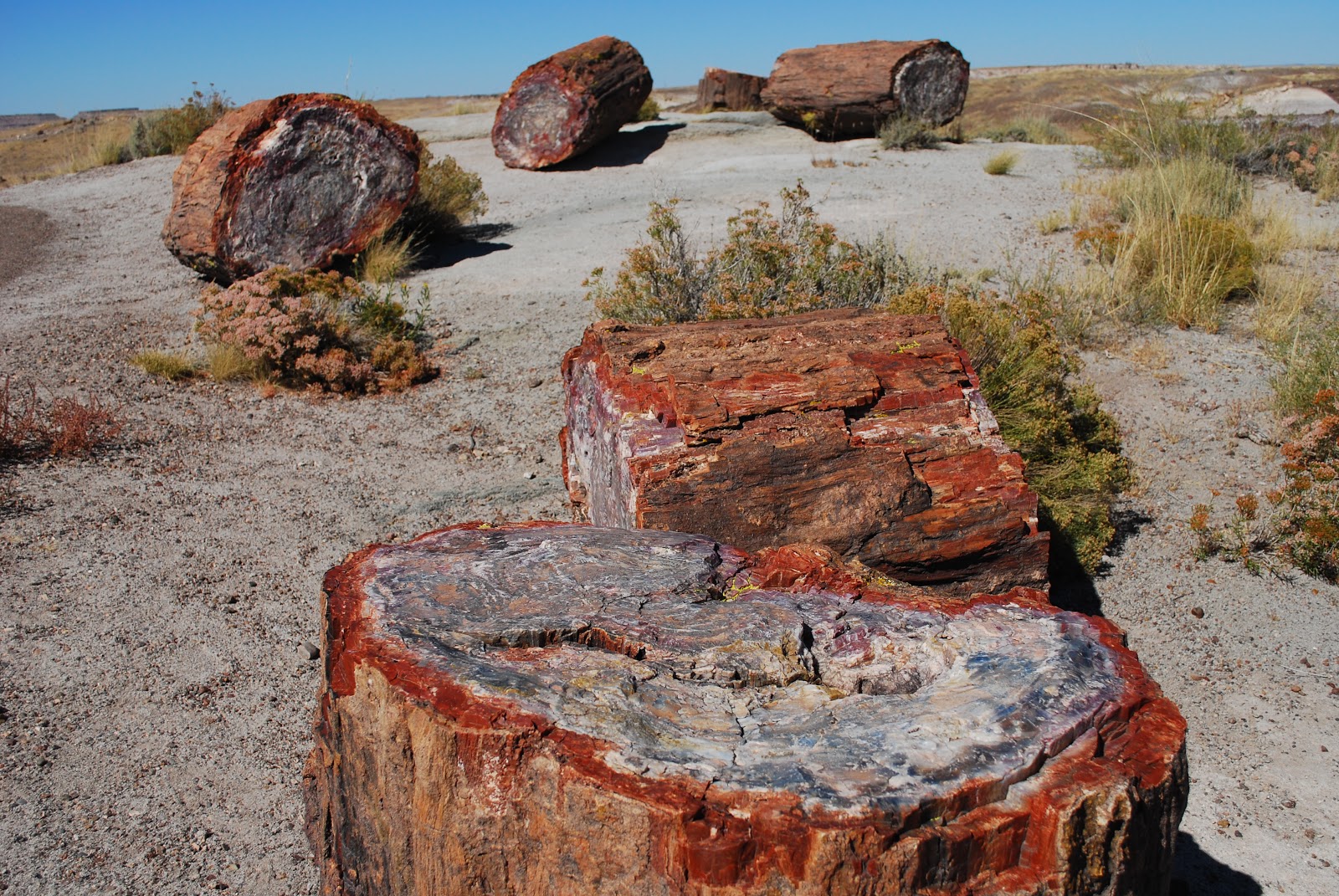
I have just visited some of the most spectacular and humbling natural landscapes anywhere. Rocks and soil possessed colours in combinations I couldn’t imagine. Petrified Forest National Park and the Painted Desert was one of those places. The park is incredibly fragile; petrified wood and fossils lay exposed to humans to walk through (and climb on, sometimes). Taking petrified wood out of the park is a big felony, and signage repeatedly warns people not to take any wood out of the park. Yet, people still do. The park ranger we talked to called people’s trip to the park people’s “Me, me, me experience: my first trip to Petrified Forest, my first crime, my first time in jail.” Why do people do things they ought not to? Is it human nature? This is something I want to explore in a little greater depth over the next few weeks, for what we consider human nature can make or break efforts to protect ecosystems from destruction and efforts towards social justice.

Human nature seems to be an excuse to condone almost anything. If someone steals something, it is human nature to want something you don’t have. If life is an evolutionary battle, competition is the name of the game, and it is human nature to want to cut costs and pay low wages to stay ahead of the pack. And if the outcomes of our behaviour are destructive on place and to people, are we just following our human nature and instincts? This is the way the world works, we are made to believe. Things can be done in any which way is acceptable at the time, and if something goes wrong, well, it was human nature at fault.

At the same time, human nature is not only an excuse post facto, but it is also reason for why we behave socially. We see acts of kindness and tenderness, acts of heroism and altruism, acts around which reason cannot be wrapped in a neat bowtie. According to the Dalai Lama, gentleness is the basic tenet of human nature. There is a clear dichotomy that has emerged here. Human nature can be individualistic, pro-social, as David Sloan Wilson (who in fact uses his training in evolutionary biology to understand how neighbourhoods function well or poorly) would call it, or somewhere in between.

Everything, including competing notions of what human nature is, gets naturalized if enough people believe it. Humans are individualistic and selfish, and that’s how they ought to be, according to Ayn Rand. Yet selfish, individualistic human beings probably didn’t do so well in hunter-gatherer communities that we all descended from. Just like language, just like compassion, human nature is learned through social behaviour, through context, through relationships. If someone has been burned time and time again, he or she will believe that human nature is to fend for oneself…don’t trust anybody. Yet if someone has been shown kindness and compassion, even the hardest of hearts crumbles and melts and morphs into one that fundamentally reconsiders what human nature is, or ought to be.

What do you think?


Thursday, September 27, 2012

On break

I haven't forgotten that I have a blog. I'm just on a six-week road trip across the country, and will be back to writing regularly when the road trip ends. Things I have seen have given me plenty to write about.


Saturday, September 1, 2012

Transforming the obligatory passage point


As you’ve probably noticed, the frequency of posts on this blog went from five per week to one (maybe two) per month over the past few months; I have been working on my dissertation, which I am glad to tell you I have just completed. (Well, it is bittersweet, really, because my not-so-well-kept secret is that I have loved graduate school; my advisor is an amazing woman.) And speaking of school, I wanted to elaborate a little bit more on the role and power of higher education in creating a changed culture, one that is aligned with being more ecologically holistic and socially just. As I have written about at length previously (here and here), the current higher education system continues to create students with cognitive bias those good at one thing and not many, all the while making vast amounts of money.

When we think of universities, we think of them as bastions of critical thinking and academic freedom. The (wishful) goal is that college is a place where naïve youth are transformed into active and engaged citizens…the University of Michigan modestly calls its students and alumni “The Leaders and Best”. But while my experience at the University of Michigan has served me well, I also feel that the University, and the higher education system more broadly, is doing a disservice to the families and students that are paying out of their noses to obtain a college degree. Grade inflation and not-too-rigourous course requirements basically mean that it takes a motivated student to get a valuable experience. Within the higher education system, it seems as though universities compete on the front of how employable to large industry and Wall Street their students are, how much corporate funding the universities receive, and how large their endowment coffers are (Michigan’s stands at several billion dollars). When it comes to graduate school, recent unionization efforts of graduate student research assistants have uncovered a whole host of unseemly student-advisor relationships; the point of research seems to be the professor’s ability to get more grants. Each one of these points I can elaborate on at length, which I will spare you from now.

During my defense, Andrew asked me about recommendations I had on how young engineers can align their work with the causes of social justice and ecological soundness, rather than with extractive industry and militarism…a complicated question for a dissertation defense…Of course, the first thing I thought of is…higher education…In reality, that’s how many debates end: “We’ve screwed things up, and it will be up to “the next generation” to get out of the messes of today. We must educate the next generation differently.” While it may seem that many of these words are empty and used lightly, I do believe that education reform stands the best chance of culturing people to be more concerned about social justice and ecological soundness. 

People from all over the world gather in a place like Ann Arbor; sprinkled and scattered widely, students, faculty and staff are now concentrated, and they are shaped and morphed by the education and educating process. The diploma students walk out with symbolizes the transformation. And once students leave, they leave for elsewhere; the students are scattered and sprinkled again. (Unfortunately, it is my impression that most students from Michigan go to one of four places: Chicago, San Francisco, Manhattan, and Boston, and not back to where they came from.) The best place for intervention in production is the factory. (How sad that mass production is an apt metaphor for higher education.) Higher education is an obligatory passage point in the modern world—without a degree, life can be difficult (and it may be difficult with a degree, too). In social science theory, an obligatory passage point is essentially a node in a social network of actors--in the creation of federal policy, the House and the Senate are obligatory passage points; in approving drugs for use, the FDA is an OPP...you get the gist. Therefore, one of the best chances the world stands for transformation is through the transformation of higher education. As students, I believe that we must demand an education that allows us to transform the structures that support unjust and ecologically degrading outcomes, not an education that keeps us entrenched in those structures. Indeed, that may be the best thing we as students can do for the next generation.

Thursday, August 9, 2012

(unsuspecting) Guest blog #26: Eric Bumbalough in Vienna

This is the entirety of an email my friend and labmate Eric sent me from his first trip to Europe. His thoughts encapsulate so many themes that have emerged on the blog over the past two years, including memories, sentimentality, and consumerism. I love it.

---
I'm writing this from Vienna because I have a story to tell you about trash.

My friend Louise and I took the subway away from the tourist center of Vienna to have dinner on the bank of the Danube River. I brought my plastic water bottle that I have been refilling for weeks. When we got back to the subway station, we realized I left my water bottle and backpack at the restaurant. We went back and retrieved it just fine.

As I was taking a drink on the walk back over the pedestrian bridge on the Danube River, I dropped the cap and it rolled into the river. Now I have this useless water bottle with no lid that reminds me of my time spent in Vienna. I think I might bring it back as my souvenir rather than some insignificant piece of trash from a tourist trap store.

Thanks,

Eric Bumbalough
Graduate Research Assistant
University of Michigan
2293 G.G. Brown Laboratory
2350 Hayward
Ann Arbor, MI 48109-4256